
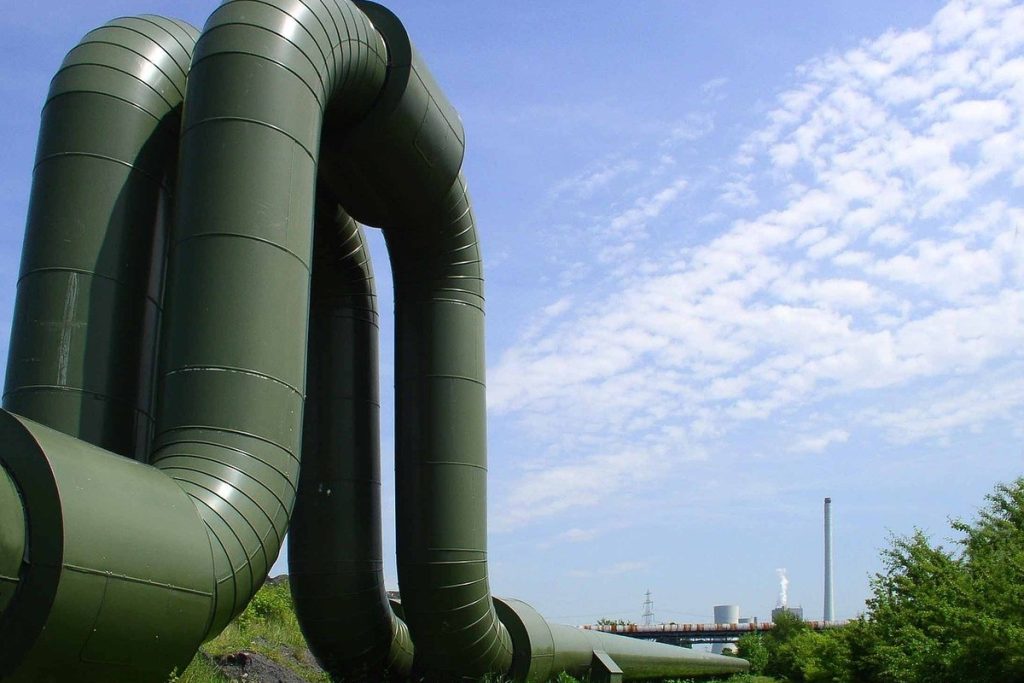
Coriance commissioned a third geothermal well at Alfortville, in the Val-de-Marne, on 15 October 2026. The well completes a triplet, two production wells and one injection well, reaching nearly 2,000 metres into the ground, where the water runs at about 70°C. Geothermal energy now makes up close to 90% of the network’s overall energy mix, according to Coriance, the company that operates the network under contract with the city.
The project renews a geothermal system that has served Alfortville since 1986. Coriance announced the renewal in February 2025, when drilling began on what the company then described as a two-well doublet reaching into the Dogger aquifer, the sedimentary layer that supplies most of the deep geothermal heat used around Paris. The system delivered in October 2026 is a triplet instead, with a second production well added to the original design. The total investment reached €22.25 million, with €7.3 million from ADEME’s Fonds Chaleur and €2.6 million from the Île-de-France region, Coriance said. Mayor Luc Carvounas and Coriance group president Fabrice Lepoutre attended the commissioning.
A well pattern that repeats elsewhere in France
Alfortville’s triplet, two production wells feeding one injection well, follows a design used on other deep geothermal projects across France: wells that bring hot water up are paired with wells that send the cooled water back underground. At Schwabwiller, in Alsace, Lithium de France, a subsidiary of the Arverne group, applies the same logic at smaller scale, a two-well doublet. It ran both wells together for the first time on 20 August 2026, drawing heat and lithium from the same water. Equipping this kind of borehole is a specialised business: geothermal probes, grout, glycol and the fittings and manifolds that connect a well to a heating network are supplied, among others, by Promafor Sovema, a drilling-equipment company based in Vauvert, in the Gard, according to its website.
Germany’s plant count climbs to its highest level yet
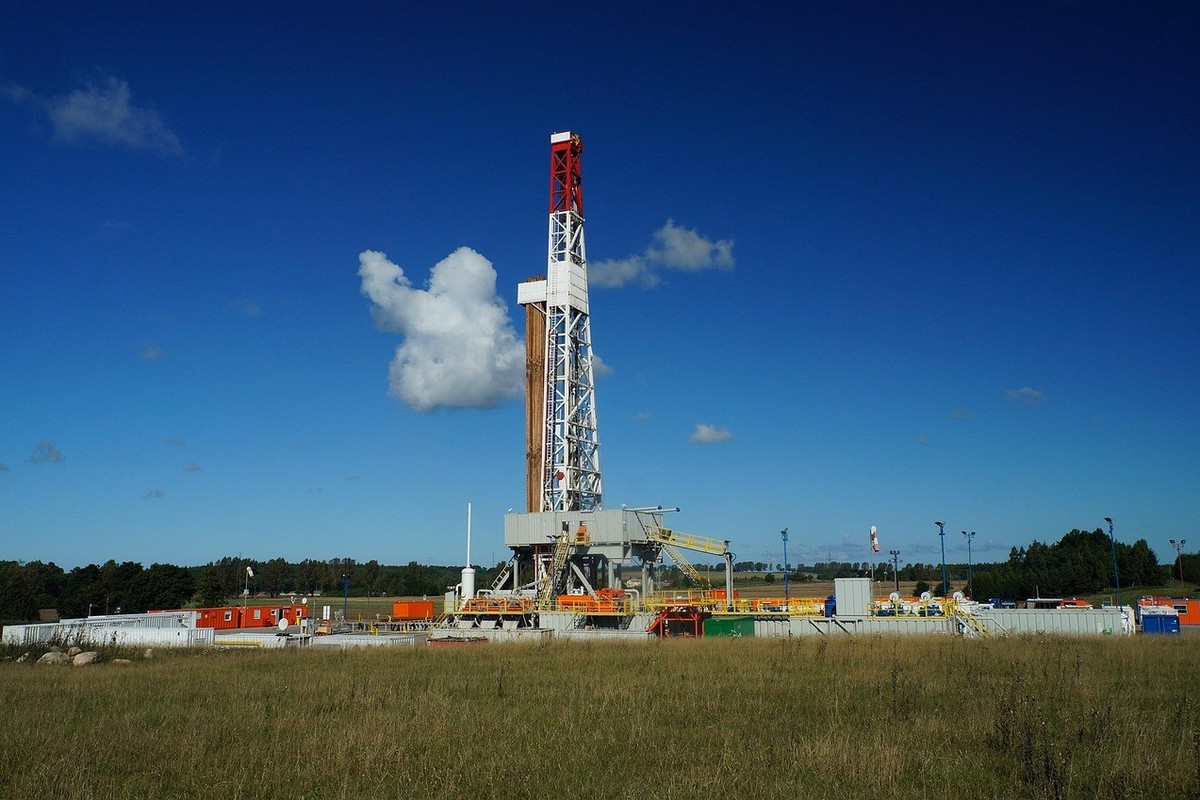
Germany is building out the same technology at a larger scale. The Bundesverband Geothermie, the country’s deep-geothermal trade association, counted 45 plants in operation in February 2026, the most it has ever recorded, up from 42 a year earlier. Of those, 43 supply heat, with a combined installed thermal capacity of 442 MW; twelve plants also feed electricity into the grid, mostly as a by-product of combined heat-and-power generation. A further 18 plants are under construction and 178 projects are in planning, the association said. Its stated goal is to grow annual output for heat networks from the current 1.8 TWh to 10 TWh, roughly a fivefold increase with no date attached to the target.
EGEC counts ten new heat networks across Europe in 2025
Zooming out, the European Geothermal Energy Council (EGEC) counted ten new geothermal district-heating systems commissioned across Europe in 2025, in a market report published on 16 July 2026: three in France, two each in Germany and the Netherlands, and one each in Denmark, Serbia and Spain. Together they added about 70 MWth of capacity. EGEC’s count covers geothermal district heating and cooling networks specifically, not individual ground-source heat pumps, which the association tracks separately.
That brings the total to 434 geothermal district-heating systems operating in Europe, with a combined capacity above 6 GWth, EGEC said. The association counts more than 500 additional projects in development, representing roughly 6 GWth more once built, a pipeline several times the size of the installed base.
In the Netherlands, most of that heat still goes to greenhouses
The Dutch figures show a different pattern from France and Germany. The Netherlands produced 7.7 petajoules of geothermal energy in 2025, 0.2 PJ more than in 2024, from 25 of its 34 installations that were active that year, according to TNO, the Dutch applied-research organisation, in a report published on 3 June 2026. Three installations started up during the year and one, at Zevenbergen, was decommissioned; operators drilled nine new wells. Most of that heat still goes to greenhouse horticulture rather than homes, though hybrid use, supplying both greenhouses and residential networks, is growing. TNO describes the overall growth as close to linear, held back by high upfront costs, grid congestion and the complexity of connecting a well field to the built environment rather than to a cluster of greenhouses next door.
France’s heat fund keeps pace with the geothermal push
Public financing has tracked that growth, at least in France. ADEME’s Fonds Chaleur committed the whole of its €801 million 2025 budget, according to figures the agency released and that Localtis, the news service of the Banque des Territoires, reported on 23 April 2026. Geothermal projects, surface and deep combined, drew €85 million across more than 300 supported schemes, 21% of the renewable and recovered-heat output the fund backed that year, behind biomass at 52% and ahead of waste-heat recovery at 18%. The pipe-making side of the business is growing too: Elydan, a French pipe manufacturer, bought Poland’s Radpol Pipes in September 2026 to widen its district-heating range across Europe.
EGEC’s report frames the current period as, in its words, a decisive moment for the sector, and calls for clearer EU-level policy to speed up deployment. For a network like Alfortville’s, the near-term marker is simpler: a third well now in place, financed and in service, after a project that grew from a planned doublet to a triplet between its February 2025 announcement and its October 2026 commissioning.
Photo: wilhei, Pixabay Content License
Photo: anita_starzycka, Pixabay Content License