
OFFSHORE WIND — POLAND / DENMARK / UK
PGE and Ørsted have added BGB Group, a UK-headquartered offshore access specialist, to the supply chain for Baltica 2, the 1.5-gigawatt wind farm the two companies are building 50/50 in the Polish Baltic Sea, about 40 kilometres off the coast near Ustka and Łeba.
BGB Group Global has been awarded a framework agreement running through the end of 2027, with options to extend, to provide offshore scaffolding and construction services across Baltica 2’s four offshore substations. Its scope covers engineered temporary access and scaffolding, cable termination and array-cable support, rope access, offshore supervision and construction coordination, and stand-by support during commissioning, according to the company. BGB said the work will be delivered through its Polish operating entity in Gdańsk, combining UK and locally recruited personnel. Neither BGB nor the two developers disclosed the framework’s financial value.
“Baltica 2 is the biggest offshore wind project in the Polish Baltic, and being able to support Ørsted and PGE on it means a great deal to everyone at BGB,” said Ben Badham, the company’s managing director. Barbara Adamczyk, BGB’s country manager for Poland, added: “This is exactly why we established BGB in Gdańsk, to be a Polish company delivering offshore work in Polish waters.”
A layered supply chain beneath the headline figure
Baltica 2 is designed around 107 Siemens Gamesa 14-megawatt turbines and four offshore substations, for a total capacity of 1,498 megawatts, enough to cover the annual electricity needs of about 2.5 million households, according to PGE. Contractor Van Oord completed the installation of all 111 monopile foundations for the turbines and substations in August 2026, using the vessels Svanen and Aeolus, and full commissioning is expected by the end of 2027.
The framework adds another specialist tier to a European offshore wind pipeline that has had uneven momentum this year: in January 2026, Britain secured a record 8.4 gigawatts of offshore wind capacity, while Germany’s equivalent tender drew no bids at all.
The addition of a specialist subcontractor at this stage is a reminder of how many tiers sit beneath a headline offshore-wind number: a project’s timeline depends on access, cabling and commissioning crews as much as on the turbines themselves. A marketenterprises.net analysis of supply chain management argues that visibility into these lower tiers is what separates companies that absorb disruptions from those that are blindsided by them, a distinction it ties directly to the kind of costliest vulnerabilities that sit beyond a company’s first-tier suppliers.
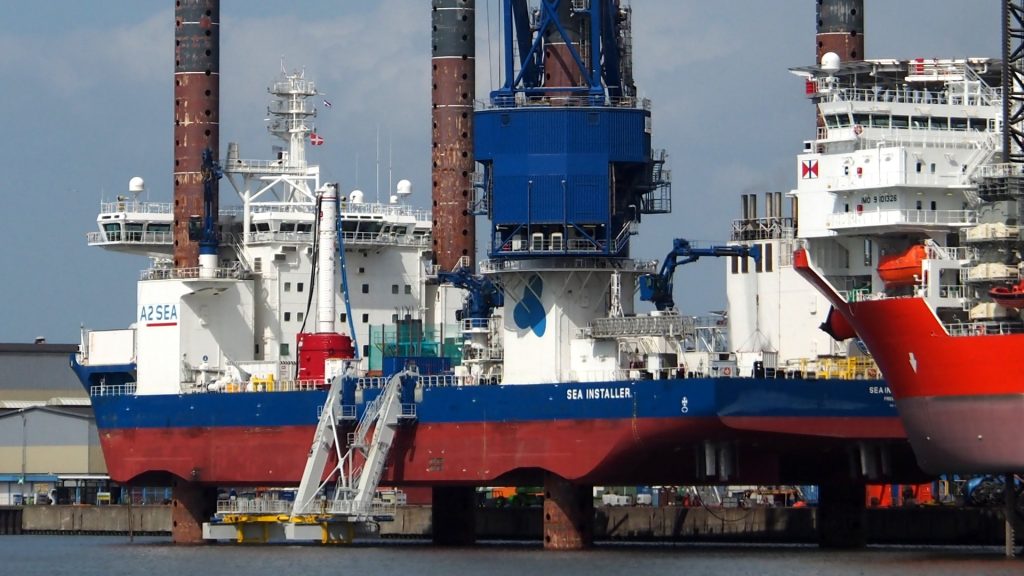
Photo: Alf van Beem, CC0 1.0 Universal, Wikimedia Commons.