
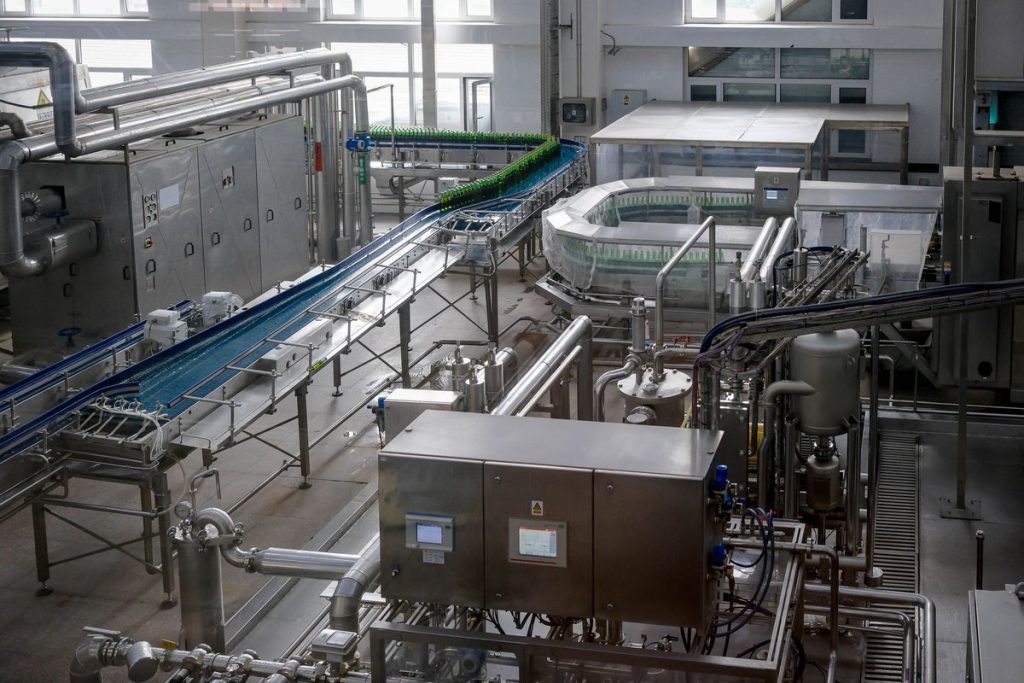
Siléane, a robotics and machine-vision maker based in Saint-Étienne, France, reported revenue of €42m in 2025, up from €10m in 2020, its founder Hervé Henry said in an interview published by business title Bref Eco on 9 July 2026. The company, which builds robots that adapt to variable-shaped or fragile objects using vision and artificial intelligence, employs 260 people and forecasts €60m in revenue for 2026.
From apple tarts to bin-picking robots
Henry founded the company in 2002 after taking on a job integrating a robot into an apple-tart production line, according to Siléane’s own account of its history. Two decades on, the company sells three main product lines: Flowpick, an adaptive pick-and-place system for fragile or fresh goods on fast-moving lines; Kamido, a bin-picking robot; and Rovaldy, a 3D-vision robot for surface-treatment applications. Siléane says its systems serve the agrifood, pharmaceutical, cosmetics, automotive, nuclear, waste-management, logistics and watchmaking sectors, and that it holds about ten patents, some jointly with large industrial groups. The company puts roughly 10% of annual revenue into research and development.
A footprint still small next to Germany’s
Siléane opened a Swiss subsidiary in 2021 and, according to Bref Eco, a commercial and technical subsidiary in the United States in 2025, part of a stated ambition to become what Henry calls a "European ETI" of robotics, targeting €200m in revenue by 2031, 70% of it from outside France. That ambition sits against a wider gap: France recorded 195 industrial robots per 10,000 manufacturing employees in 2024, according to IFR World Robotics data as reported by Robotics Valley, less than half the 449 recorded for Germany in the International Federation of Robotics (IFR) release of 8 April 2026. Robot density in Western Europe averaged 267 per 10,000 employees that year, against an EU-27 average of 231, the IFR said. A domestic vision-and-AI robotics supplier scaling into export markets is one response to that gap.
Public filings offer a partial, independent check on the company’s account. Siléane’s operating entity, registered in Saint-Étienne, reported revenue of €24m for 2024, according to French business registry Pappers. A separate holding company, Siléane Group, was created on 20 March 2025 with capital of nearly €397,000 – consistent with the restructuring that accompanied the arrival of private-equity investor Motion Equity Partners, which Siléane names as its majority shareholder. The registry does not confirm the group’s consolidated 2025 revenue of €42m cited by the company.
Financing an ETI ambition
Motion Equity Partners, a French private-equity firm, took a majority stake to back Siléane’s expansion, the company says, without disclosing the size of the investment. The move mirrors a broader pattern in French industrial robotics, where investors have backed established makers to help them scale into export markets rather than starting from a research spin-off. Whether Siléane reaches its 2031 target will depend in large part on whether the international share of its revenue can be raised to the 70% it targets over the next five years; in the interview, the company did not give its current export share.
Image credit: BI ravencrow (Pexels)