
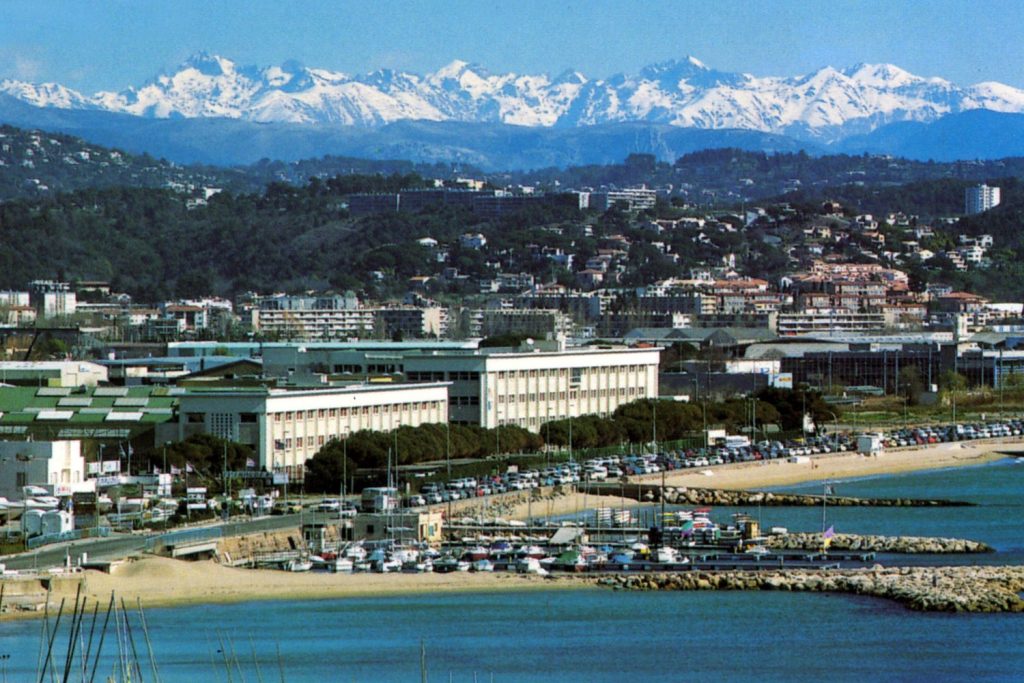
Cannes, 10 September 2026: Thales Alenia Space has signed a letter of agreement with Eutelsat to provide the governmental payloads for the 330 IRIS2 telecommunications satellites in low Earth orbit, in an order worth about €500 million, the company said.
The tranche is part of a much larger programme. According to Thales Alenia Space, the order is one slice of a global IRIS2 contract that is set to exceed €3 billion for the company overall. Its chief executive, Hervé Derrey, thanked the European Commission, the SpaceRISE consortium of telecom operators and Eutelsat for their confidence.
The 330 satellites are built in two layers. Layer One comprises 66 Ka-only satellites, due to launch in 2029: Thales Alenia Space develops the payloads and Airbus Defence and Space supplies the platforms. Layer Two comprises 264 dual Ku/Ka satellites, due to launch from 2030: Thales Alenia Space is responsible for the payloads and Aerospacelab develops the platforms. The low-orbit satellites will fly at 1,200 km. The full IRIS2 constellation counts 348 satellites, the release adds, with 18 more in medium Earth orbit at 8,000 km.
What the payloads are meant to do. The company says they will enable the first secure space-based 5G network, combining in-orbit traffic routing, active interference management and end-to-end secure communications. It also plans a dedicated chipset for the software-defined antennas, which it expects to add to system capacity, flexibility and mission agility. The satellites will exchange data with one another through optical inter-satellite links.
Derrey said: "IRIS2 will represent the pinnacle of telecommunications constellations."
Thales Alenia Space is a joint venture between Thales, which holds 67%, and Leonardo, which holds 33%.
Image credit: Guy Lebègue, CC BY-SA 3.0, Wikimedia Commons (https://commons.wikimedia.org/wiki/File:CentreSpatialCannes_SiegeThalesAleniaSpace.jpg)
